
Some images of a new amp design.
Blue mode.

Green mode.

And the final red mode.

Tubes are EF86, 12AX7, and EL84. Stay tuned for more information.
Work in progress
Some images of a new amp design.
Blue mode.

Green mode.

And the final red mode.

Tubes are EF86, 12AX7, and EL84. Stay tuned for more information.
Always exciting when designing something new.

An Ibanez FL9 Flanger service
The pedal works in bypass but does not flange when engaged, and the indicators led is not lit.

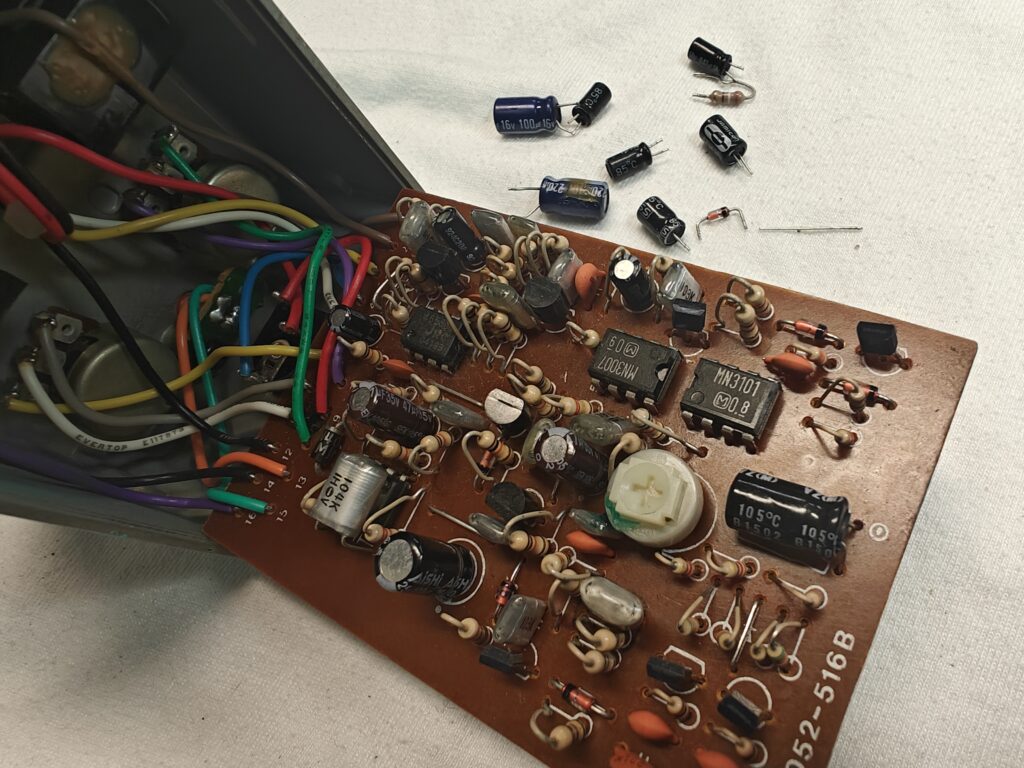
Bottom view of the circuit board.

Component side, TL022 opamps, MN3102 clock driver and the MN3207 BBD delay.

Problem located with the TL022 acting as LFO for the clock driver. It had shorted out, even burnt of the GND copper layer on the circuit board. The opamp was replaced and the GND connection was added.

Replaced the broken led indicator, also added a higher value current limit resistor for it. Recalibrated bias, clock and regen.
Recieved som parts for a new project, this will be fun.

A pretty rare vintage J&J phaser for some service
The box is in good condition and has the original packaging.

Bottom side of the circuit board.

And the component side.

The circuit contains six NEC741 opamps, a transistor emitter follower on the output stage, and four stages of phase shifting with 2SK68 j-fets.

The old tantalum capacitors got replaced with film and electrolyts, also added som filtering on the output stage to get the noice level down.
Service of a T.C Electronic Chorus/Flanger
The pedal came in for service with no output.

With the bottom lid of.

Removing the circuit board reveals the second circuit board.

Looking at the first circuit board on the component side. All IC:s has their markings grinded down except for the MN3007 BBD.

Top side of the second circuit board with one of the bad pots removed.

The pedal had several issues. Two bad potentiometers, one could be repaired the other had to be replaced. Bad solder joints on the input jack and the balance trim pot from the BBD’s outputs were bad. Sorting the issues out brought it back to life. An image with a new potentiometer installed.

The pedal is powered with 230VAC with a small transformer on the 1:st circuit board. Had it rebuilt for operation with a normal 9VDC supply.

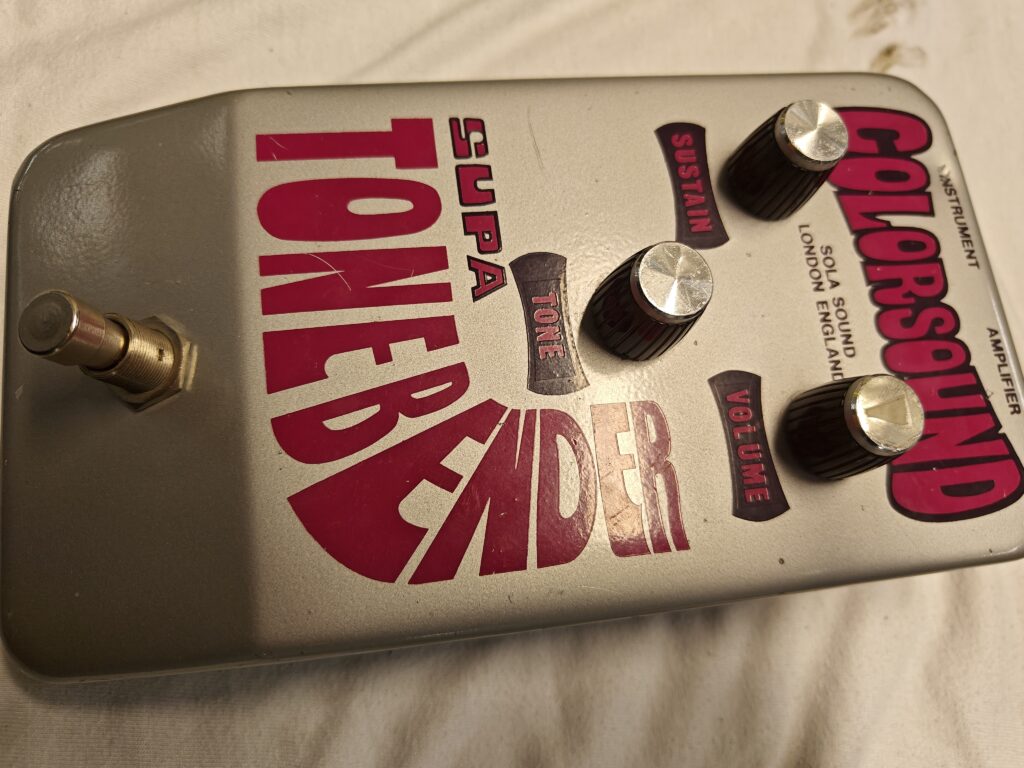
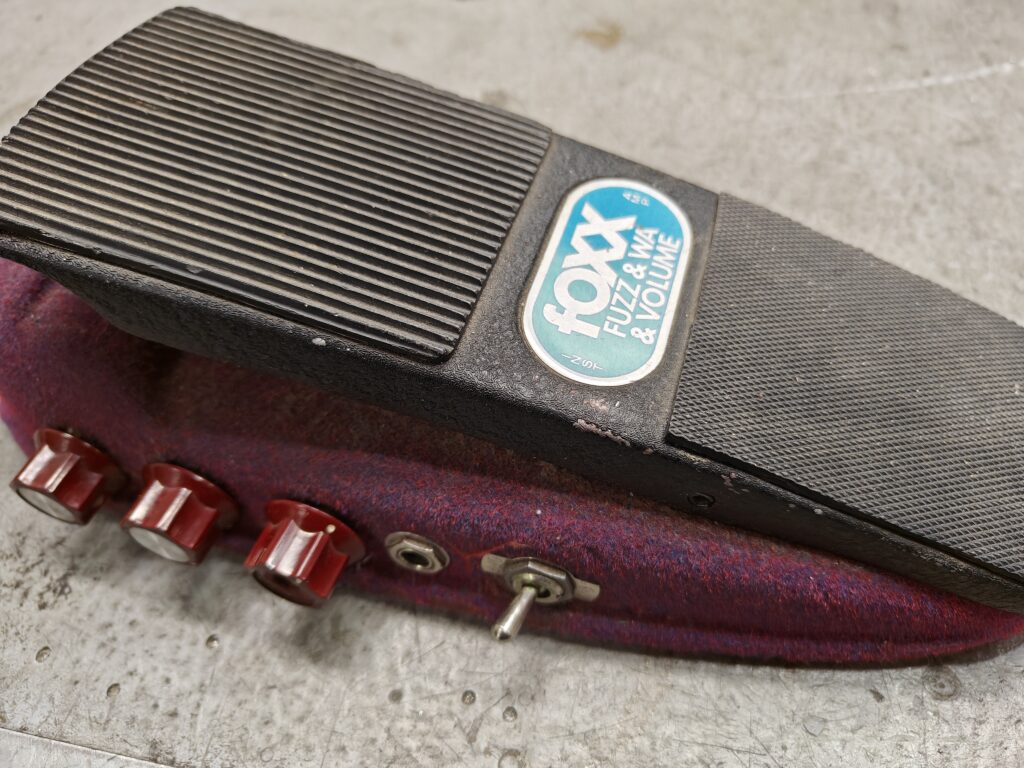
Service on a rare Colorsound pedal
Just love the looks of these old pedals.

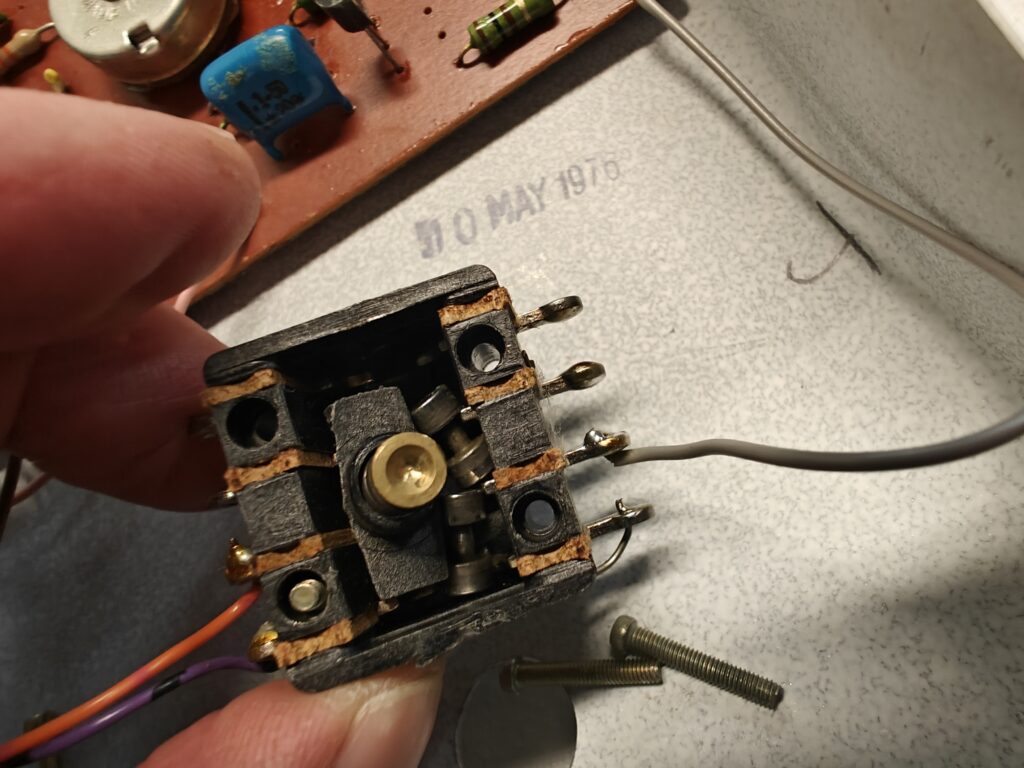
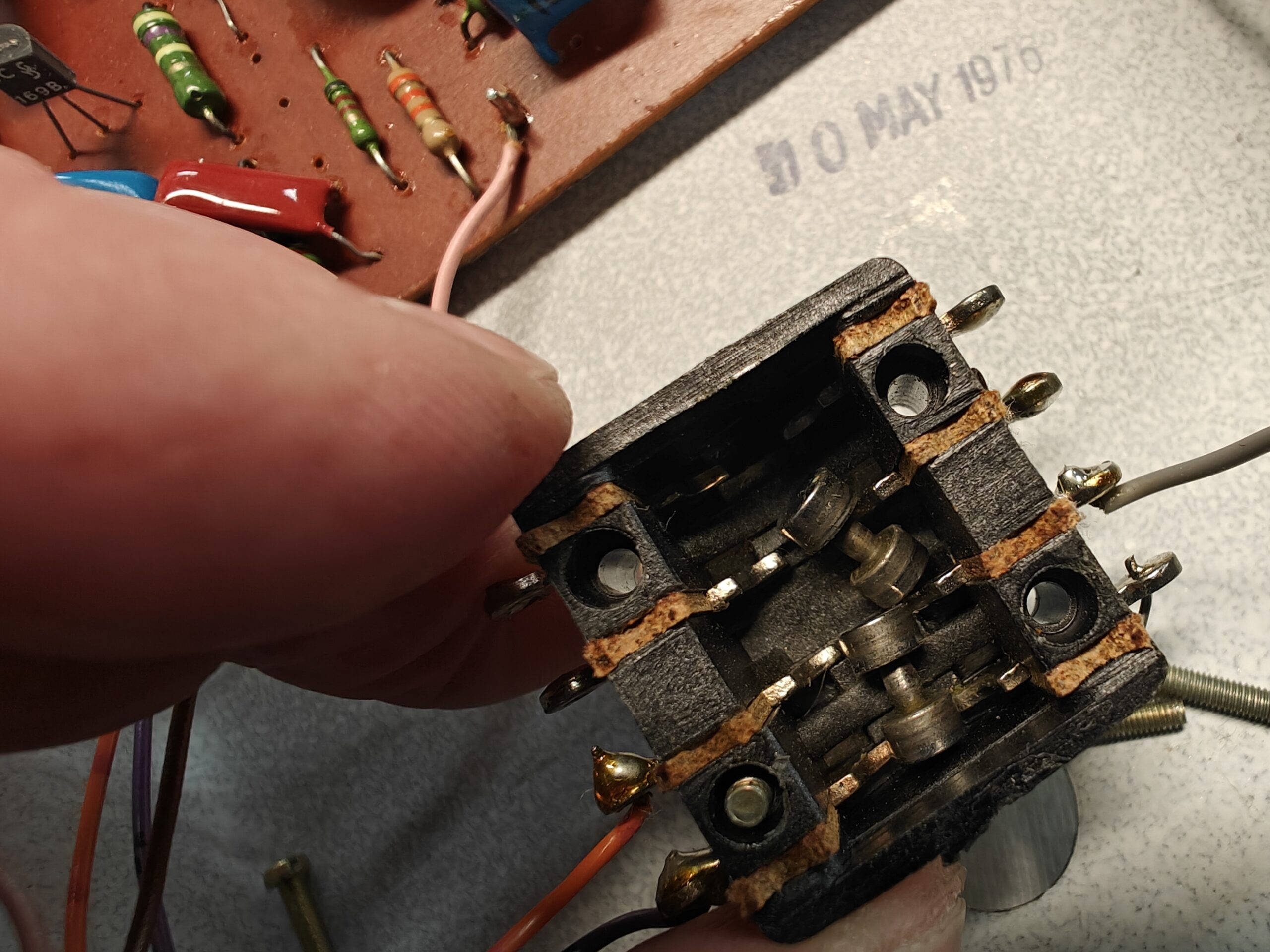
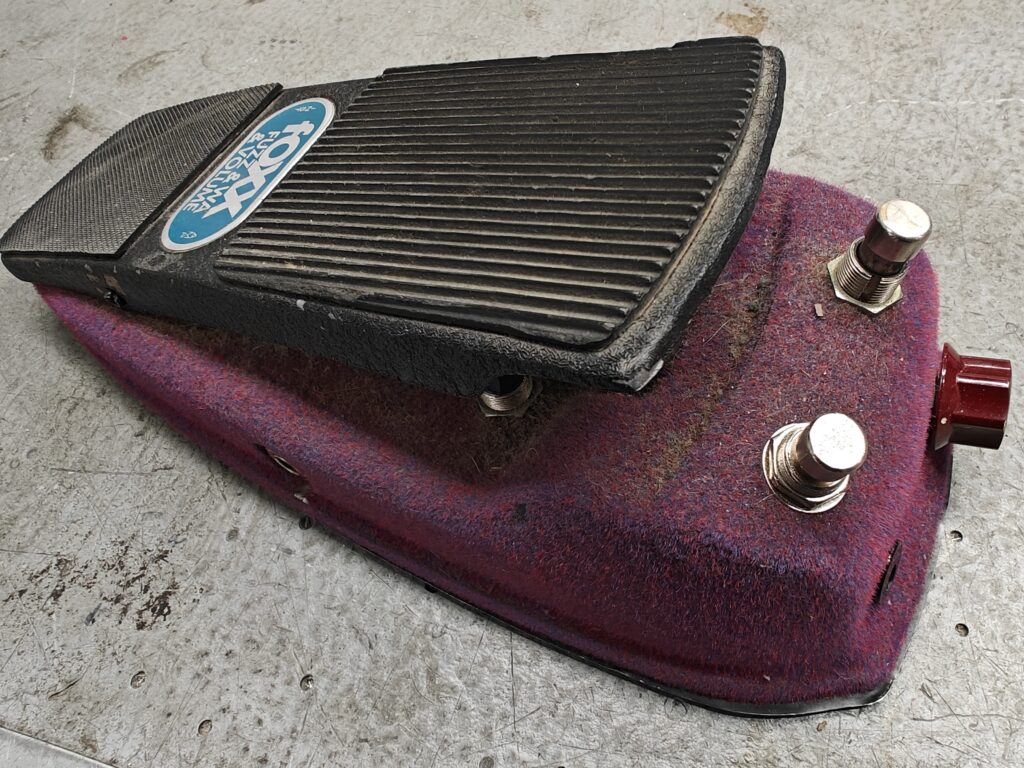
The outside consists of three knob, bypass switch for the Fuzz and a treadle for the speed and bypass of the phaser.

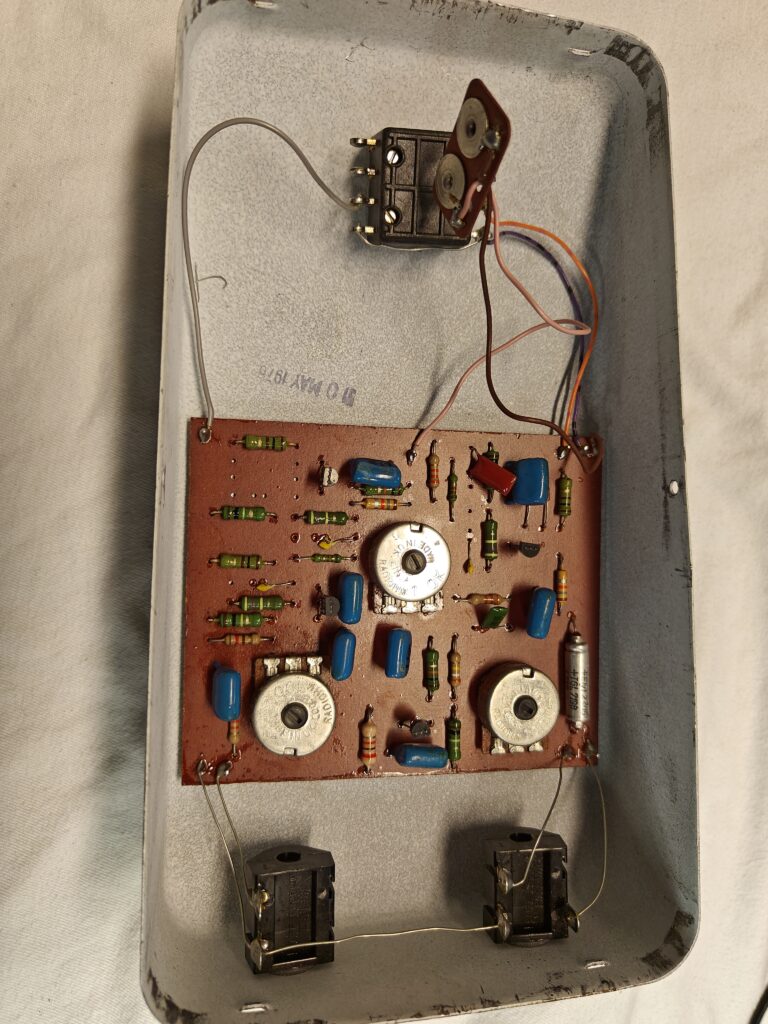
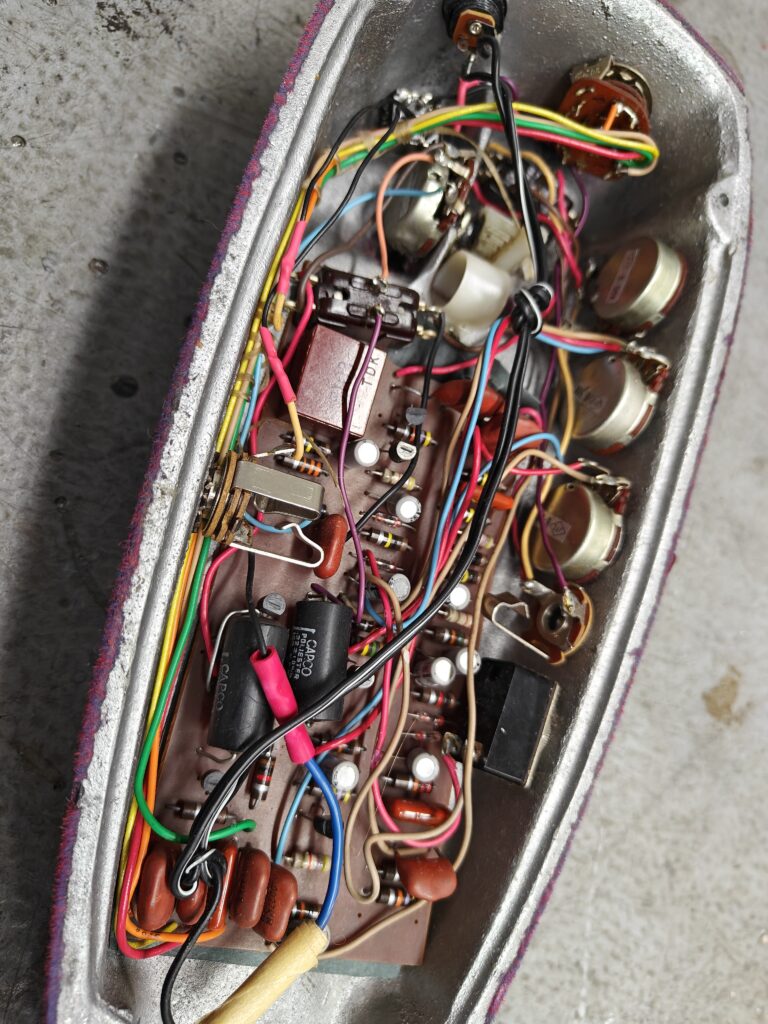
Inside the case there’s two separate circuit boards stacked. One for the fuzz and the other for the phaser.

Top circuit holds the phaser, appears to be a four stage phaser.

Bottom side of the phaser cicrcuit board.

The Fuzz circuitboards. A three transistor circuit, a pair of diodes back to back. A Colorsound Jumbo tonebender?

Bottom side.

The issue with the pedal is the phaser, sounds weak in its phasing. The old tantalum capacitors where replaced, the fets bias was recalibrated and the depth was adjusted. Now it sounds as good as new.
Servicing an Ibanez Standard Wau Wau
A vintage Ibanez wah pedal in nice condition, though it sounds a bit off.

The original screw is present along with a battery compartment on the bottom lid.

The guts. Shielded wiring for the signal cables.

Bottom side of the circuit board.

A quick fix for this pedal. The wah potentiometer was loose and just had to be aligned and tightened for the right sweep. The old electrolyte caps were swapped with new ones.

Once again ready to Rock!

Service/mod of a rebranded? Wah Swell pedal.
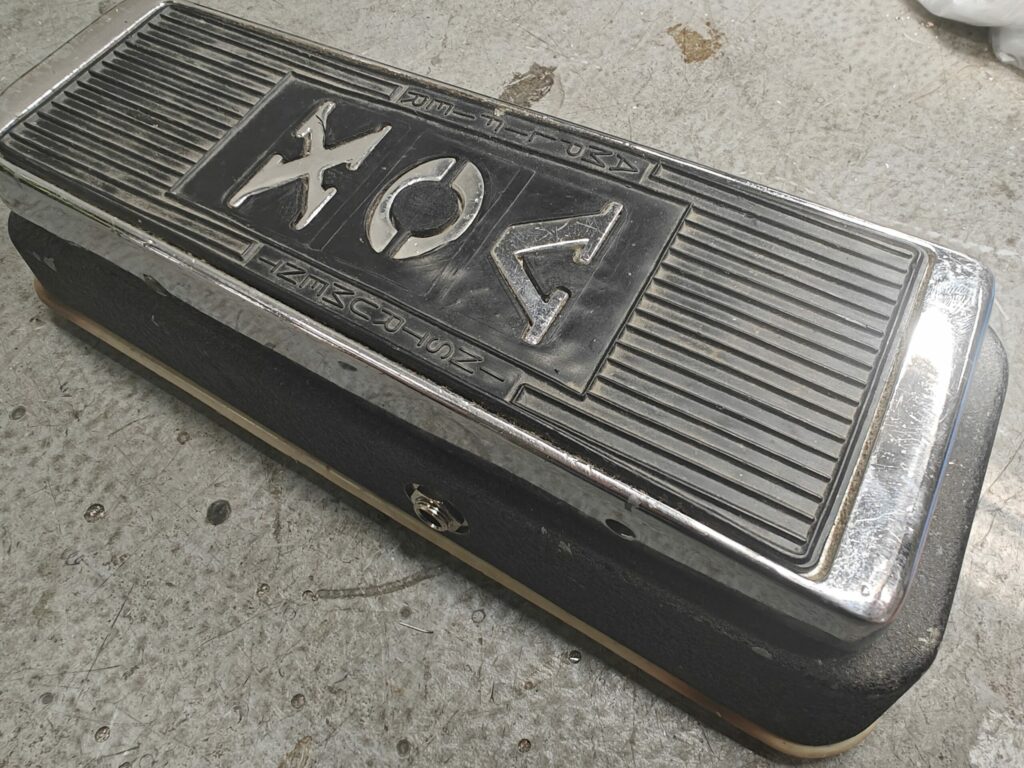
The pedal on the workbench, branded Fรถrstรคrkardoktorn.

Fรถrstรคrkardoktorn(Amplifier doctor) was a Swedish store selling musical instruments back in the days. It even has the original price tag on it.

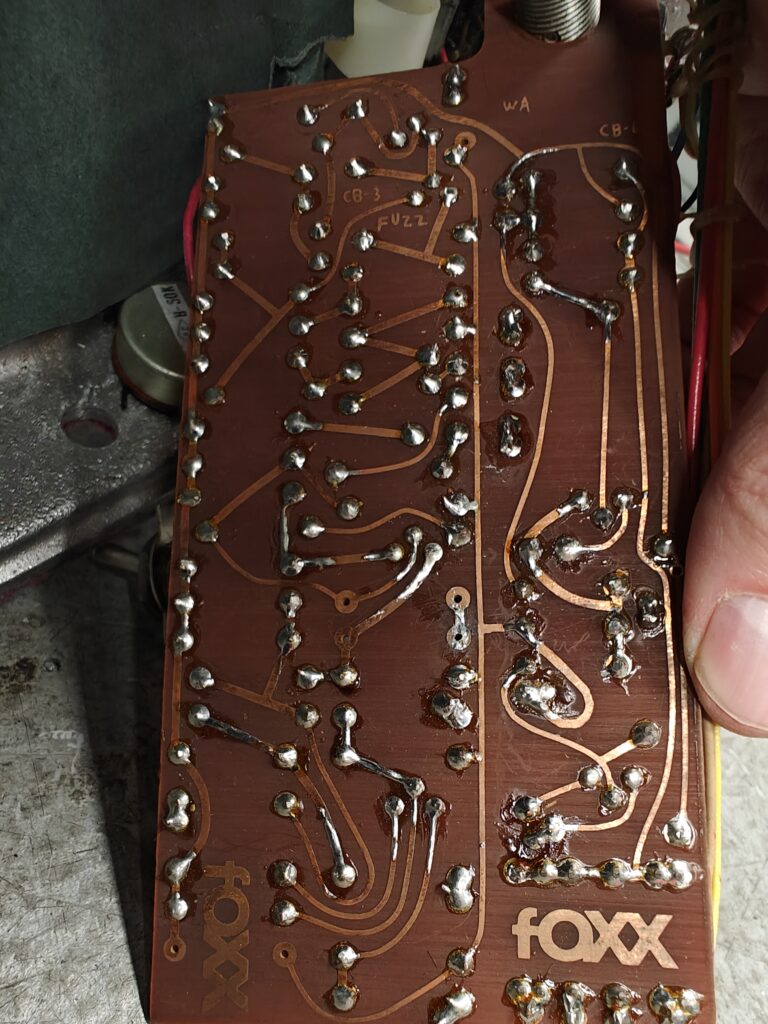
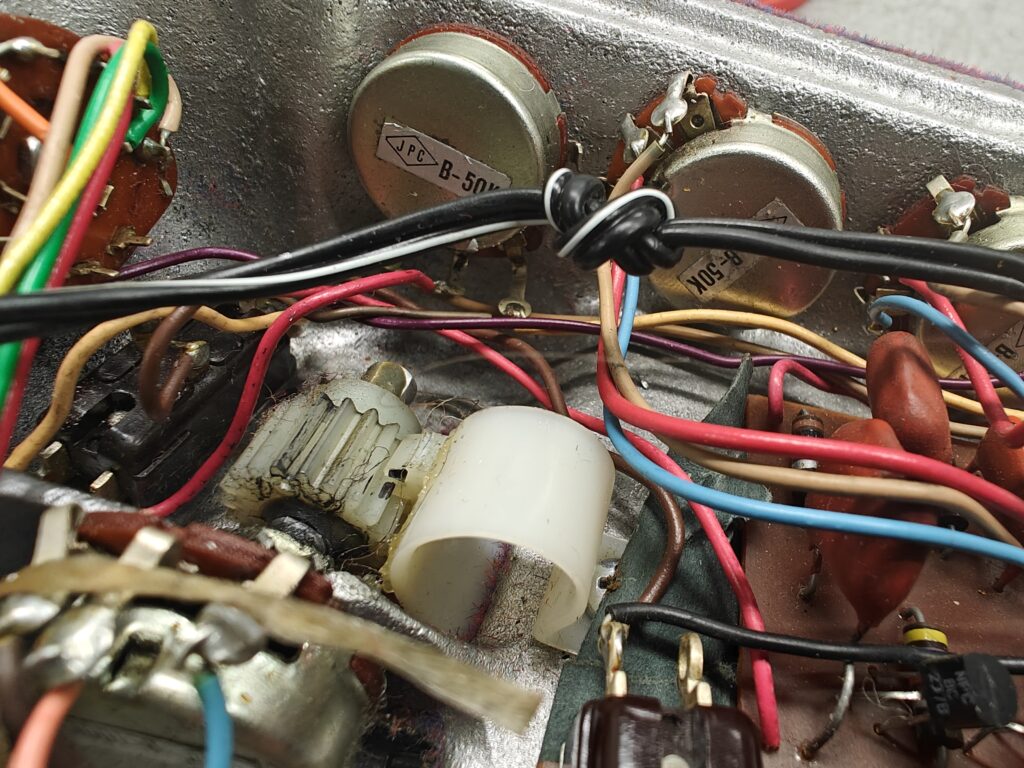
The wah circuit corresponds a lot with Colorsound Wah Swell circuit, at least for the wah part. As seen in this pic there’s a double gang cermet potentiometer, using the other side as a volume pot.

Solder side of the circuitboard.

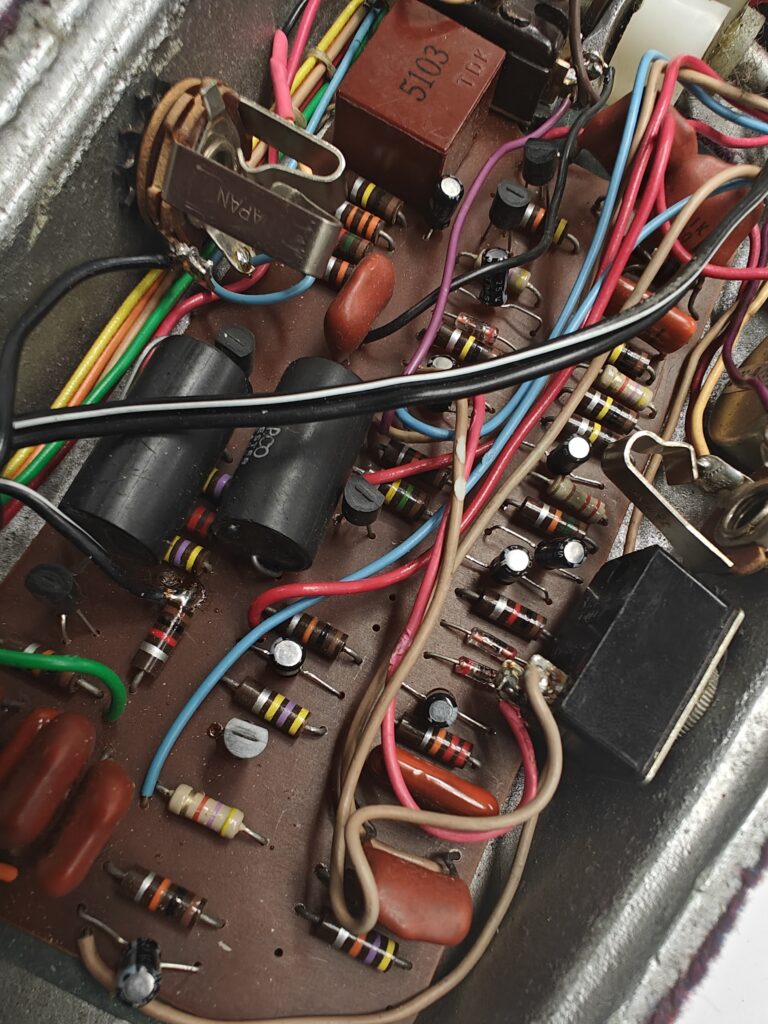
Here’s the circuit modified. Removed the passive swell part and wired it for true bypass, added a trimpot for overall output volume and adjusted the tone of the wah.

Service on a defect Soldano SP-77
On the workbench, a Soldano SP-77 in a nice cosmetic condition. It produces a very low, ugly distortion on both channels.

There are no obvious signs of anything wrong on the inside.

However, a voltage control on some critical points spotted the problem. The 100K resistor R24 is no longer conducting.

A photo of the circuit board’s bottom side.

After replacing the defective R24 resistor and the dried-up electrolytic caps, it is now functioning properly.